
Zobacz, jak systemy agentowe zmieniają tworzenie oprogramowania i zacierają granicę między klasycznym programowaniem a rozwiązaniami no-code.
Programowanie agentowe wyrasta na rewolucyjny paradygmat. W przeciwieństwie do sztywnych podejść autonomiczne agenty potrafią rozumieć, interpretować i wykonywać złożone zadania z elastycznością, która do niedawna była nie do pomyślenia.
Czym jest agent? Definicja i podstawowe pojęcia
Termin agent oznacza autonomiczny system oprogramowania, który potrafi:
- Postrzegać swoje otoczenie
- Analizować zebrane informacje
- Podejmować decyzje samodzielnie
- Działać na rzecz osiągnięcia konkretnych celów
Kluczowe cechy agenta
• Działa bez stałej ingerencji człowieka
• Wykazuje inicjatywę
• Dostosowuje działania do zmieniającego się kontekstu
• Rozumie niuanse i kontekst
• Interpretuje złożone informacje
• Wyciąga wnioski wykraczające poza bezpośrednie instrukcje
• Doskonali się wraz z doświadczeniem
• Koryguje strategie
• Zapamiętuje i wykorzystuje wcześniejsze interakcje
• Potrafi współdziałać z innymi agentami
• Wymienia się informacjami i je udostępnia
• Współpracuje przy rozwiązywaniu złożonych problemów
Anatomia autonomicznego agenta
┌─────────────────────────┐
│ Perception Layer        │
│ - Information gathering │
├─────────────────────────┤
│ Cognitive Layer         │
│ - Analysis              │
│ - Reasoning             │
├─────────────────────────┤
│ Decision Layer          │
│ - Planning              │
│ - Action selection      │
├─────────────────────────┤
│ Execution Layer         │
│ - Implementation        │
│ - Adaptation            │
└─────────────────────────┘
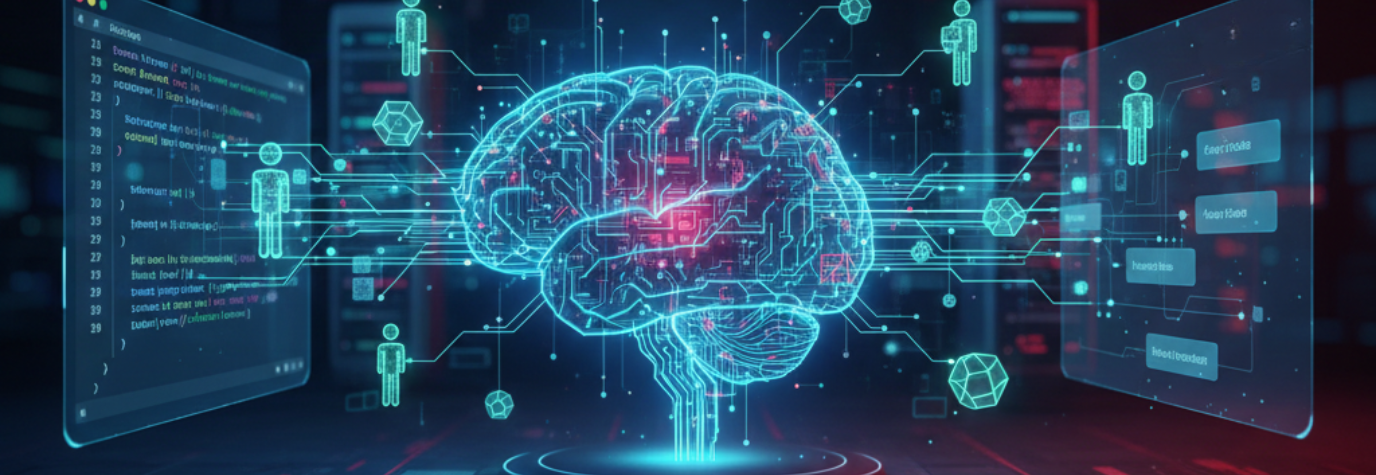
LLM: mózg systemów agentowych
Sztuczna inteligencja w sercu autonomii
Duże modele językowe (LLM) stały się głównym silnikiem systemów agentowych i radykalnie zwiększyły ich zdolność rozumowania oraz autonomię. Te modele nie są już prostymi narzędziami do przetwarzania języka, lecz prawdziwymi systemami kognitywnymi, które potrafią:
- Zaawansowane rozumienie kontekstu
- Interpretować złożone niuanse
- Rozumieć ukryte intencje
- Wyciągać wnioski wykraczające poza dosłowny tekst
- Rozumowanie wieloetapowe
- Rozkładać złożone problemy na części
- Planować sekwencje działań
- Dynamicznie dostosowywać strategie
Zdolności rozumowania: stan na 2026 rok
Modele czołowe a możliwości człowieka
| Wymiar | Modele AI (2026) | Możliwości człowieka | Różnica |
| Szybkość przetwarzania | 10^15 operacji/s | 10^16 operacji/s | Niewielka |
| Pamięć kontekstowa | 1 milion tokenów | ~7 ± 2 elementy | Przewaga AI |
| Rozumowanie logiczne | Trafność 85-90% | Zależne od osoby | Porównywalne |
| Kreatywność | Na wczesnym etapie | Głęboka i oryginalna | W trakcie rozwoju |
Wprowadzenie: nowa granica
Programowanie agentowe wyrasta na rewolucyjny paradygmat, który łączy klasyczne tworzenie oprogramowania ze światem no-code. W przeciwieństwie do dotychczasowych, sztywnych podejść autonomiczne agenty potrafią rozumieć, interpretować i wykonywać złożone zadania z elastycznością, która do niedawna była nie do pomyślenia.
Wpływ ekonomiczny i ROI
Systemy agentowe przynoszą firmom wymierne korzyści:
| Wskaźnik | Wpływ | Konkretny przykład |
| Krótszy czas tworzenia oprogramowania | 40-60% | MŚP buduje swój CRM w 3 tygodnie zamiast 3 miesięcy |
| Koszt utrzymania | -30% | Agenty same dostosowują się do zmian w biznesie |
| Średni zwrot z inwestycji | 6-12 miesięcy | Projekt inteligentnego chatbota zwraca się po 8 miesiącach |
| Produktywność zespołu | +25% | Programiści uwolnieni od powtarzalnych zadań |
No-code i programowanie agentowe: naturalna konwergencja
Systemy agentowe mają kilka kluczowych cech wspólnych z no-code:
- Abstrakcja: ukrywanie złożoności technicznej
- Dostępność: umożliwienie tworzenia rozwiązań osobom, które nie programują
- Elastyczność: dynamiczne dostosowanie do zmieniających się potrzeb
Programista staje się architektem
Programowanie agentowe daje programistom nową, strategiczną rolę:
- Projektowanie wysokopoziomowe: przejście od pisania kodu linijka po linijce do definiowania inteligentnych architektur
- Orkiestracja: projektowanie systemów, w których agenty współpracują i same się organizują
- Przyspieszenie: wdrażanie złożonych rozwiązań w ułamku tradycyjnego czasu
- Innowacja: koncentracja na logice biznesowej zamiast na szczegółach technicznych
Przykład: tworzenie aplikacji przez wyspecjalizowane agenty
Uczestnicy procesu
- Agent Product Owner
- Analizuje potrzeby biznesowe
- Definiuje specyfikację
- Ocenia propozycje
- Agent UX/UI
- Projektuje doświadczenie użytkownika
- Generuje makiety
- Proponuje intuicyjne interakcje
- Agent programista
- Przekłada specyfikację na kod
- Dobiera odpowiednie technologie
- Implementuje funkcjonalności
- Agent tester
- Generuje przypadki testowe
- Weryfikuje zgodność
- Wykrywa anomalie
Współpraca w ramach workflow
Product Owner → UX/UI → Developer → Tester
      ↑                     ↓
      └─────── Feedback ────┘
Narzędzia dla programistów i twórców
Podejście uniwersalne: LLM przez HTTP
Najważniejsze: LLM są w centrum wszystkich rozwiązań agentowych i są dostępne przez standardowe API HTTP. Dzięki temu programowanie agentowe jest niezależne od języka i można je stosować w każdym środowisku programistycznym.
Zalety podejścia HTTP:
- Uniwersalność: zgodność ze wszystkimi językami (Python, C#, JavaScript, Java, Go, Rust…)
- Elastyczność: brak zależności od konkretnego frameworka
- Przenośność: łatwa migracja między językami
- Dostępność: agenty można tworzyć nawet w językach z niewielką liczbą bibliotek AI
Ogólny przykład wywołania LLM przez HTTP:
POST https://api.openai.com/v1/chat/completions
Content-Type: application/json
Authorization: Bearer YOUR_API_KEY

{
  "model": "gpt-4",
  "messages": [
    {
      "role": "system",
      "content": "You are an assistant specialized in agentic programming."
    },
    {
      "role": "user",
      "content": "Explain what an autonomous agent is."
    }
  ],
  "temperature": 0.7
}
Frameworki programistyczne
Uwaga: Python pozostaje najpopularniejszym językiem w ekosystemie AI dzięki bogactwu bibliotek, ale dzięki podejściu HTTP te koncepcje sprawdzają się w każdym języku.
Frameworki w Pythonie
- LangChain (Python)
- Tworzenie własnych agentów
- Integracja wielu narzędzi
- Maksymalna elastyczność
- Rynek: +150% wdrożeń w 2025 roku, ponad 2 mln aktywnych programistów
- CrewAI
- Systemy wieloagentowe
- Współpraca wyspecjalizowanych agentów
- Workflow sekwencyjny lub hierarchiczny
- Rynek: wzrost o 200% w III kwartale 2025 roku, ponad 500 firm korzystających
Frameworki w C#
- Microsoft Agent Framework (C#)
- Oficjalny framework Microsoftu dla .NET
- Natywna integracja z Azure OpenAI
- Obsługa wielu języków: C#, F#, VB.NET
- Rynek: premiera w 2025 roku, ponad 500 tys. programistów .NET
- Zalety: płynna integracja z ekosystemem Microsoftu (Azure, Visual Studio, GitHub)
- Semantic Kernel (C#)
- Opracowany przez Microsoft Research
- Modułowa i rozszerzalna architektura
- Obsługa wielu dostawców (OpenAI, Azure, Hugging Face)
- Rynek: ponad 300 tys. pobrań z NuGet, używany w ponad 200 firmach
- Zalety: idealny dla istniejących aplikacji korporacyjnych w .NET
Przykład z Microsoft Agent Framework w C#:
using Microsoft.Agents;
using Microsoft.Agents.OpenAI;

// 1. LLM client configuration
var llmClient = new OpenAIClient("YOUR_API_KEY");

// 2. Agent definition
var agent = new AgentBuilder()
    .WithName("Assistant")
    .WithSystemPrompt("You are an expert programming assistant.")
    .WithLLM(llmClient)
    .WithTools(new CalculatorTool())
    .Build();

// 3. Agent execution
var response = await agent.ProcessAsync(
    "Calculate 15 * 23 and explain the result."
);

Console.WriteLine(response.Content);
Przykład z Semantic Kernel w C#:
using Microsoft.SemanticKernel;
using Microsoft.SemanticKernel.Connectors.OpenAI;

// 1. Kernel initialization
var kernel = Kernel.CreateBuilder()
    .AddOpenAIChatCompletion("gpt-4", "YOUR_API_KEY")
    .Build();

// 2. Adding plugins (tools)
kernel.ImportPluginFromFunctions("Calculator",
    new[]
    {
        kernel.CreateFunctionFromMethod(
            (double x, double y) => x * y,
            "Multiply",
            "Multiplies two numbers"
        )
    });

// 3. Execution with chaining
var result = await kernel.InvokePromptAsync(
    "Calculate 15 * 23 using the calculator."
);

Console.WriteLine(result);
Rozwiązania no-code
- OpenCode
- Wizualne składanie workflow
- Integracja gotowych, skonfigurowanych agentów
- Dostępność dla osób, które nie programują
- Rynek: ponad 50 tys. użytkowników, runda finansowania 15 mln EUR w 2025 roku
- Roo-Code
- Automatyczne generowanie oprogramowania
- Dostosowanie do kontekstu
- Uczenie się na podstawie potrzeb użytkowników
- Rynek: ponad 100 tys. wygenerowanych projektów, partnerstwa z ponad 200 firmami
- Claude Code
- Generowanie kodu ze wsparciem AI
- Rozumienie intencji
- Podpowiedzi zależne od kontekstu
- Rynek: zintegrowany z ponad 1500 IDE, ponad 5 mln aktywnych użytkowników
Rozwiązywanie złożonych problemów
Konkretny przykład: aplikacja do zarządzania projektami
Scenariusz: MŚP potrzebuje narzędzia do śledzenia projektów, skrojonego na miarę.
Proces agentowy:
- Agent Product Owner analizuje konkretne potrzeby
- Agent UX/UI projektuje dopasowany interfejs
- Agent programista implementuje funkcje
- Agent tester weryfikuje i optymalizuje
Rezultat: Rozwiązanie szyte na miarę w ułamku tradycyjnego czasu.
Zaawansowany workflow: system wieloagentowy z obsługą błędów
from crewai import Agent, Task, Crew, Process
from langchain_openai import ChatOpenAI

# LLM Configuration
llm = ChatOpenAI(model="gpt-4", temperature=0.7)

# Specialized agents with error handling
product_owner = Agent(
    role="Product Owner",
    goal="Analyze needs and define specifications",
    backstory="Business analysis expert with 10 years of experience",
    llm=llm,
    verbose=True,
    allow_delegation=True,
    max_iter=3  # Limits attempts to avoid infinite loops
)

ux_designer = Agent(
    role="UX/UI Designer",
    goal="Create intuitive and accessible interfaces",
    backstory="UX Designer passionate about accessibility",
    llm=llm,
    verbose=True,
    allow_delegation=False
)

developer = Agent(
    role="Full Stack Developer",
    goal="Implement features with clean code",
    backstory="Senior developer expert in React and Python",
    llm=llm,
    verbose=True,
    allow_delegation=True,
    tools=[CodeGeneratorTool(), DatabaseTool()]  # External tools
)

tester = Agent(
    role="QA Tester",
    goal="Validate quality and identify bugs",
    backstory="QA engineer with expertise in automated testing",
    llm=llm,
    verbose=True,
    allow_delegation=False
)

# Tasks with validation criteria
task1 = Task(
    description="Analyze requirements for the project management app",
    agent=product_owner,
    expected_output="Detailed specifications document"
)

task2 = Task(
    description="Create UI/UX mockups for the application",
    agent=ux_designer,
    expected_output="Interactive mockups and wireframes",
    context=[task1]  # Dependency on previous task
)

task3 = Task(
    description="Implement core functionalities",
    agent=developer,
    expected_output="Functional and documented code",
    context=[task1, task2]
)

task4 = Task(
    description="Test application and generate quality report",
    agent=tester,
    expected_output="Test report with identified bugs and fixes",
    context=[task3]
)

# Crew with process management
crew = Crew(
    agents=[product_owner, ux_designer, developer, tester],
    tasks=[task1, task2, task3, task4],
    process=Process.sequential,  # Sequential execution
    verbose=True,
    memory=True  # Enables memory between tasks
)

# Execution with error handling
try:
    result = crew.kickoff()
    print("✓ Workflow completed successfully")
except Exception as e:
    print(f"✗ Workflow error: {e}")
    # Recovery and retry logic
Mechanizmy techniczne agentów
Wewnętrzna architektura agenta
- Strategiczny prompt engineering
- Prompty systemowe: definiują rolę i zasady zachowania
- Few-shot learning: przykłady, które ukierunkowują odpowiedzi
- Chain-of-thought: rozumowanie krok po kroku
- Autorefleksja: agent analizuje i poprawia własne błędy
- Mechanizmy pamięci
- Pamięć krótkotrwała: kontekst bieżącej rozmowy (tokeny)
- Pamięć długotrwała: trwałe przechowywanie danych (wektorowe bazy danych)
- Pamięć epizodyczna: przywoływanie istotnych doświadczeń z przeszłości
- Strategie łączenia zadań
- Sekwencyjna: zadania wykonywane jedno po drugim
- Hierarchiczna: agent nadrzędny koordynuje podagenty
- Rekurencyjna: agent wywołuje sam siebie, aby rozwiązać podproblemy
Niezawodność i testowalność
Obecne wyzwania:
- Halucynacje LLM (nieprawdziwe informacje)
- Niespójność odpowiedzi
- Trudność w zapewnieniu determinizmu
Strategie walidacji:
# Validation example with unit tests
import pytest
from langchain.agents import AgentExecutor

def test_agent_response_consistency():
    """Test that agent provides consistent responses"""
    agent = create_test_agent()
    responses = []

    # Run the same question 5 times
    for _ in range(5):
        result = agent.invoke({"input": "What is an agent?"})
        responses.append(result["output"])

    # Verify that responses are semantically similar
    assert all("autonomous" in r for r in responses), "Inconsistency detected"

def test_agent_error_handling():
    """Test that agent handles errors gracefully"""
    agent = create_test_agent()

    # Impossible question
    result = agent.invoke({"input": "Calculate the square root of -1"})
    assert "error" in result["output"].lower() or "impossible" in result["output"].lower()
Dobre praktyki produkcyjne:
- Ogranicz liczbę iteracji (
max_iter) - Wdrażaj guardrails (zabezpieczenia)
- Rejestruj wszystkie interakcje na potrzeby audytu
- Na produkcji używaj modeli z niską temperaturą
- Systematycznie testuj przed wdrożeniem
Najważniejsze korzyści
- Szybkość: przyspieszone tworzenie oprogramowania
- Personalizacja: precyzyjne dopasowanie
- Dostępność: niższe bariery techniczne
- Innowacja: pojawianie się kreatywnych rozwiązań
Wspomaganie zamiast zastępowania
Systemy agentowe oparte na LLM szybko się rozwijają, ale wciąż mają istotne ograniczenia:
- Ekspresja ludzka: tylko człowiek potrafi sformułować głębokie i złożone potrzeby
- Osąd etyczny: ocena moralna pozostaje wyłącznie domeną człowieka
- Intuicja twórcza: zdolność do tworzenia radykalnie nowych koncepcji
Współpraca człowieka z agentem
Systemy agentowe stają się partnerami kognitywnymi:
- Wzmacniają możliwości człowieka
- Radzą sobie ze złożonością operacyjną
- Uwalniają ludzką kreatywność na potrzeby zadań wysokiego poziomu
Podsumowanie
Programowanie agentowe to nie zastępstwo, lecz ewolucja. Łączy klasyczny kod z rozwiązaniami no-code i pozwala każdemu tworzyć technologię.
Przyszłość tworzenia oprogramowania to współpraca, inteligencja i dostępność.
👉 Porozmawiaj z ekspertemMateriały
Szkolenia
- Polecane kursy:
- Udemy: „AI Agents & Workflows – The Practical Guide” (4 godz.)
- Oficjalna dokumentacja:
- Dokumentacja LangChain: https://python.langchain.com/docs/
- Samouczki CrewAI: https://docs.crewai.com/tutorials
- OpenAI API: https://platform.openai.com/docs
- Dokumentacja OpenCode: https://opencode.ai/docs
Frameworki w Pythonie
- LangChain: https://python.langchain.com/
- CrewAI: https://docs.crewai.com
Frameworki C#/.NET
- Microsoft Agent Framework: https://learn.microsoft.com/en-us/azure/ai-services/agents
- Semantic Kernel: https://learn.microsoft.com/en-us/semantic-kernel/
Rozwiązania no-code
- OpenCode: https://opencode.ai
- Roo-Code: https://roo-code.com
- Claude Code: https://claude.ai/code
Dokumentacja API modeli LLM
- OpenAI API: https://platform.openai.com/docs
- Azure OpenAI: https://learn.microsoft.com/en-us/azure/ai-services/openai/
- Anthropic Claude: https://docs.anthropic.com/